
Data centers and AI are becoming the foundation of the modern digital economy, powering everything from generative AI platforms to cloud applications and automated business systems. However, the rapid expansion of artificial intelligence has created a new challenge: how can the world support growing AI demand without creating unsustainable pressure on energy, water, and environmental resources?
As AI adoption accelerates, governments, technology providers, and businesses are beginning to rethink how digital infrastructure is built and managed. The future of technology will not only depend on faster processors and smarter algorithms but also on efficient, sustainable, and responsible data centers and AI infrastructure.
Table of Contents
- The Growth of Data Centers and AI
- 7 Sustainability Trends Shaping Data Centers and AI
- Why AI Infrastructure Needs Regulation
- Business Impact of Sustainable Infrastructure
- AI, Data Centers, and Website Performance
- The Future of Sustainable AI Computing
The Growth of Data Centers and AI
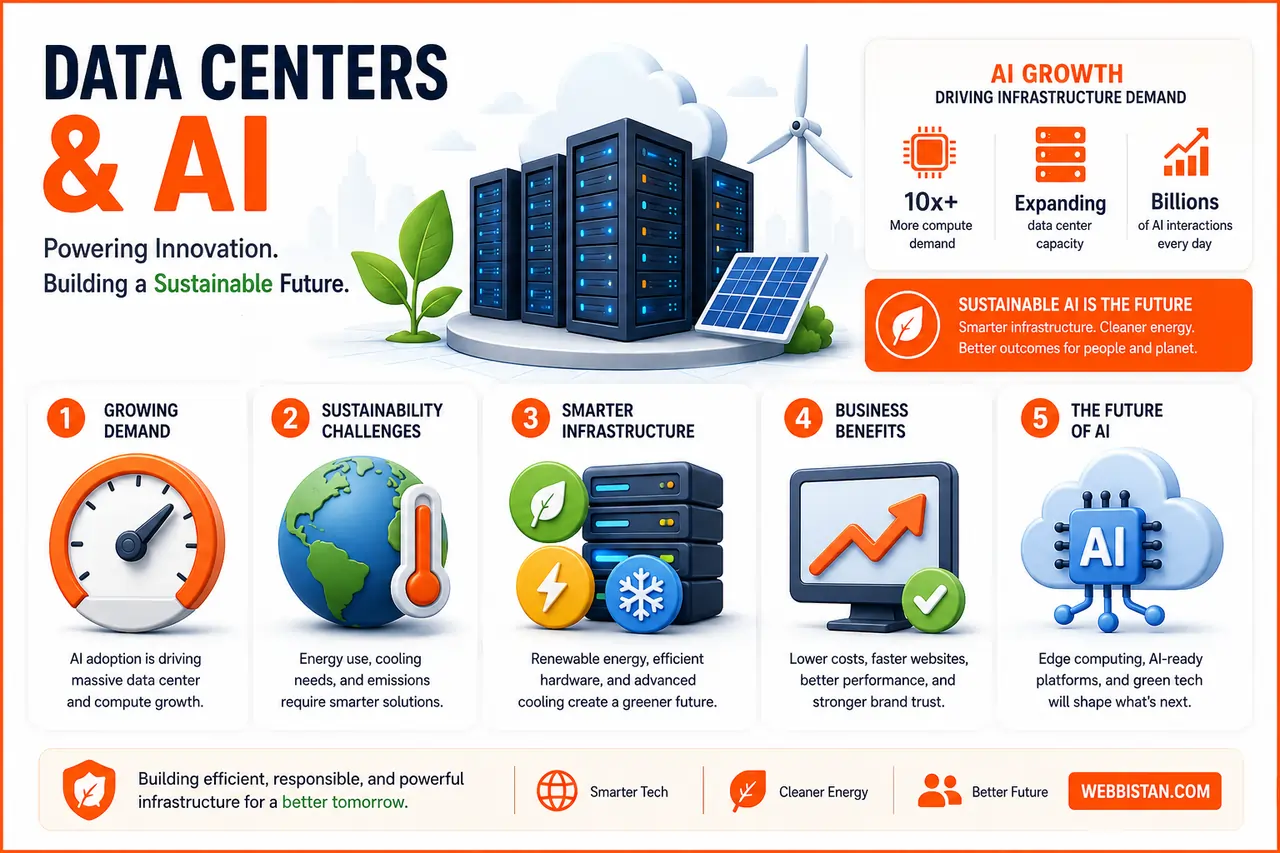
The explosion of generative AI has transformed data centers from simple storage facilities into powerful computing ecosystems. Large language models require massive processing capabilities, advanced cooling systems, and continuous energy consumption to operate efficiently.
Every AI interaction, automated workflow, and digital service depends on physical infrastructure running behind the scenes. While AI feels invisible to users, the reality is that it relies on thousands of servers working together inside modern data centers.
This rapid expansion creates opportunities but also raises important questions about sustainability. Businesses adopting AI solutions must now consider not only performance but also the environmental impact of the technology supporting their operations.
Why Data Centers and AI Need Better Regulation
The increasing demand for AI computing has pushed governments and technology leaders to focus on stronger regulations around energy usage, emissions, and resource management.
Future regulations are expected to encourage:
- Energy efficiency improvements: Reducing power consumption through smarter hardware and software optimisation.
- Renewable energy adoption: Increasing the use of cleaner energy sources for digital infrastructure.
- Cooling innovation: Developing advanced cooling methods that reduce water consumption.
- Transparency: Helping businesses understand the environmental impact of their technology providers.
This transition does not mean slowing AI innovation. Instead, it creates a requirement for smarter development where technology growth and sustainability work together.
7 Sustainability Trends Shaping Data Centers and AI
As data centers and AI continue to expand, sustainability is becoming a major focus for technology companies. These seven trends are shaping how digital infrastructure will operate in the future:
- Renewable Energy Adoption: Data center operators are moving toward solar, wind, and other clean energy sources to reduce environmental impact.
- Energy-Efficient AI Computing: Companies are developing smarter hardware and optimized AI models that require less processing power.
- Advanced Cooling Technologies: Innovative cooling systems, including liquid cooling, are helping reduce energy and water consumption.
- Green Data Centre Certifications: Sustainability standards and certifications are becoming important factors when selecting technology partners.
- Edge Computing Growth: Processing data closer to users helps reduce latency and lowers the need for massive centralized infrastructure.
- AI-Powered Energy Management: Artificial intelligence is being used to monitor and optimize power usage inside modern facilities.
- Sustainable Digital Development: Businesses are focusing on lightweight websites, efficient applications, and optimized infrastructure to reduce resource consumption.
Why Data Centers and AI Matter for Businesses
For businesses, the evolution of data centers and AI will influence everything from operational costs to website performance. Companies depending on cloud platforms and AI tools may experience changes as infrastructure providers adapt to new sustainability requirements.
Modern businesses should evaluate whether their digital systems are efficient, scalable, and prepared for future changes. A poorly optimized website or outdated technology stack can increase costs and reduce performance.
Investing in professional SEO and website optimization helps businesses improve digital efficiency while creating a stronger foundation for AI-driven search and automation.

The Connection Between AI, Data Centers, and Website Performance
The relationship between AI infrastructure and digital performance is becoming increasingly important. Faster websites, optimized code, and efficient systems require fewer computing resources while delivering better user experiences.
Businesses that focus on lightweight development and sustainable digital practices can benefit from improved speed, better user engagement, and stronger search visibility.
As explained in our guide on sustainable web design and green hosting, performance and environmental responsibility are becoming connected factors in modern digital strategies.
AI adoption also requires strong technical foundations. Through solutions like AI integration and CRM solutions, businesses can automate workflows while maintaining better control over their digital ecosystem.
How Businesses Can Prepare for Sustainable AI
Companies preparing for the next phase of digital transformation should focus on building efficient systems that support both humans and AI technologies.
- Choose efficient infrastructure: Work with providers focused on performance and sustainability.
- Optimize digital assets: Improve website speed, code quality, and technical structure.
- Improve data management: Clean and organize information so AI systems can process it effectively.
- Monitor technology trends: Stay prepared for changing AI regulations and infrastructure requirements.
The Future of Data Centers and AI
The future of data centers and AI will focus on balance. The technology industry must continue innovating while reducing environmental impact.
We are likely to see more advanced approaches such as edge computing, where processing happens closer to users, reducing dependence on massive centralized facilities.
Businesses will also need to focus on AI-ready digital platforms. This includes improving technical SEO, structured data, and content quality so brands can perform better across AI-powered search experiences.
Understanding Generative Engine Optimization (GEO) is becoming essential as AI systems increasingly influence how users discover information online.
The future of technology will not be defined only by how powerful AI becomes, but by how efficiently and responsibly we build the infrastructure supporting it.
Key Takeaways
- AI growth is increasing demand for advanced data center infrastructure.
- Sustainability is becoming a major factor in technology decisions.
- Businesses need efficient websites and digital systems for future AI adoption.
- Green infrastructure and performance optimization will become competitive advantages.
- Preparing today will help businesses adapt to the next generation of AI-powered technology.
The rise of data centers and AI represents one of the biggest technology shifts of our time. Businesses that focus on efficiency, sustainability, and innovation will be better positioned as the digital landscape continues evolving. According to International Energy Agency (IEA), improving energy efficiency and adopting sustainable technology solutions will play a critical role in managing future digital growth.
For companies looking to build stronger digital foundations, explore our WordPress website design and development solutions to create faster, scalable, and AI-ready platforms. Businesses can also learn more about responsible AI development through resources from NIST AI Risk Management Framework to better prepare for the future of artificial intelligence.