
In a landmark regulatory pivot that echoes global concerns over authenticity and intellectual property, Australia bans AI-generated music from being eligible for official national music charts. This decisive action by industry bodies marks a significant milestone in the ongoing struggle to define the boundaries of creativity in an era of machine-learning dominance. For Sydney businesses and digital creators, this announcement signals a fundamental shift in how synthetic media will be treated, governed, and monetized across the Australian market.
The move comes as the creative sector grapples with the saturation of AI-synthesized content that threatens to dilute the value of human artistry. As generative technology continues to disrupt traditional workflows, understanding the nuances of these restrictions is critical for anyone leveraging AI for brand growth or content production. Here at Webbistan, we recognize that this is not merely a music industry story; it is a preview of the structural adjustments coming for every digital industry, from professional web development to search-first marketing strategies.
Table of Content
- What Happened: The Key Announcement
- Implications for the Australian Market
- Generative Engine Optimization and AI Credibility
- Strategic Recommendations for Growth
What Happened: The Key Announcement
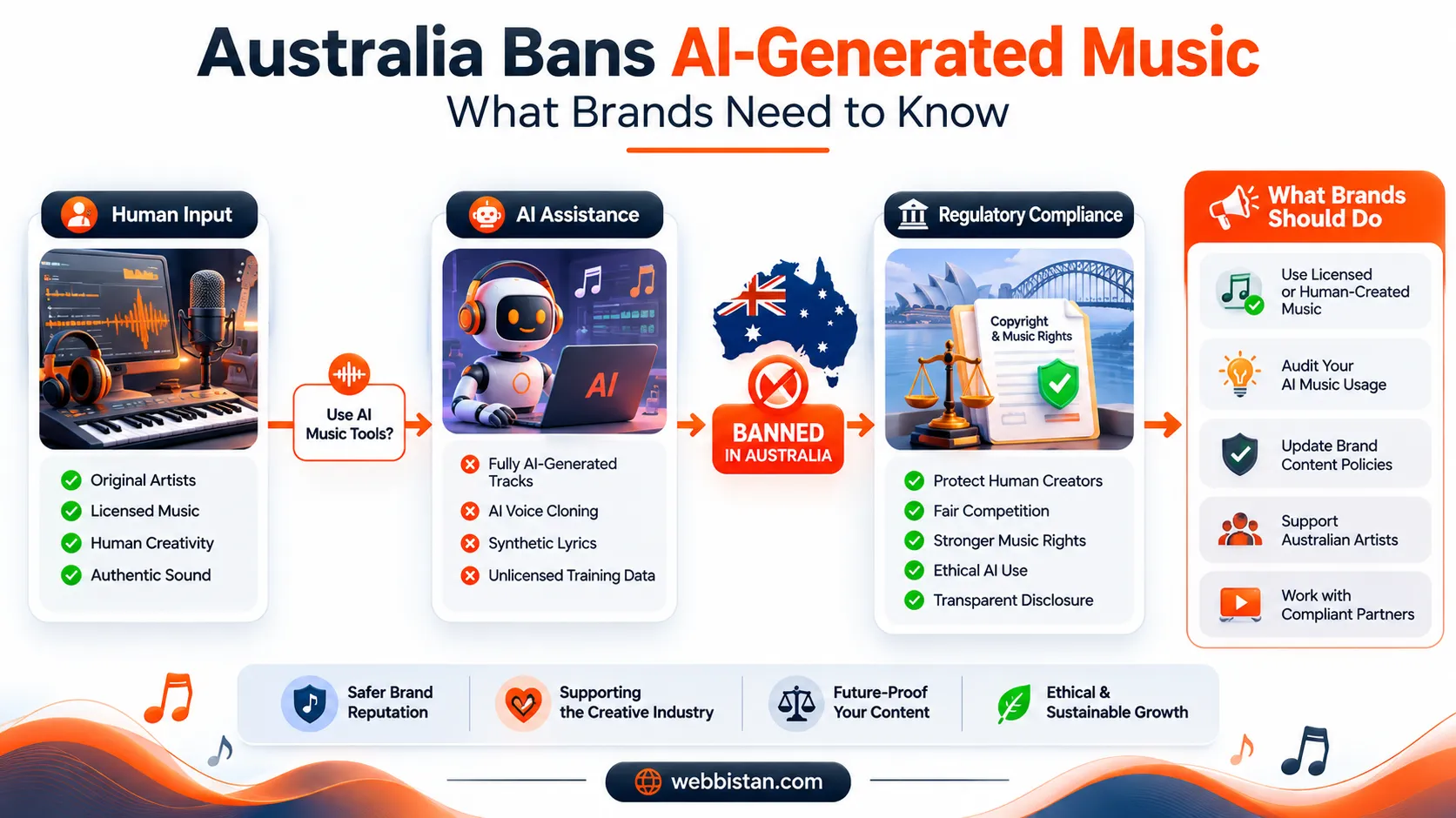
The decision to exclude AI-generated tracks from ARIA-sanctioned charts creates a hard line between human-composed material and machine-outputted files. By defining music eligibility through a lens of human authorship, the industry is effectively establishing a “digital provenance” requirement. This is the latest example of how Australia’s AI regulation ambition is beginning to translate from policy white papers into tangible industry standards.
This exclusion serves as a protectionist barrier, ensuring that chart-topping spots—and the royalties associated with them—remain tied to human creative endeavor. For those following the evolution of synthetic media, this mirrors the growing focus on social license in the AI space. It is a clear message that while technology can assist in creation, it cannot substitute the identity of the creator.
Implications for the Australian Market
While the ban specifically targets music charts, the ripple effects are expected to reach the broader Sydney and Australian business landscape. Executives and marketing directors must now contend with a climate where “AI-generated” is becoming a regulatory red flag in specific high-trust sectors. This aligns with broader concerns regarding artificial intelligence and data privacy, where the source and legitimacy of content are under constant audit.
For companies in the digital agency space, this necessitates a more transparent approach to content creation. Whether you are building high-converting sales funnels or producing editorial content, the emphasis on human-in-the-loop workflows is more critical than ever. The Australian market is increasingly prioritizing authenticity, and ignoring this shift in sentiment could result in significant brand erosion.

Generative Engine Optimization and AI Credibility
The decision also places a spotlight on the intersection of Generative Engine Optimization (GEO) and market transparency. As platforms like Google and OpenAI refine their search ecosystems, they are prioritizing content that displays high EEAT (Experience, Expertise, Authoritativeness, Trustworthiness). Just as the music charts are filtering for human authorship to maintain trust, search engines are increasingly penalizing low-effort, mass-produced synthetic content.
Web publishers need to understand that the “AI-search-vs-traditional-search” divide is narrowing. As we explore AI search vs Google search behaviors, it becomes evident that high-quality, human-validated content wins both in consumer trust and in algorithmic ranking. Leveraging expert-led website optimization ensures your business remains on the right side of these shifting definitions of authority.
Why Content Authenticity Remains King
Google’s recent updates suggest that the search engine giant is actively seeking to identify and demote content that provides little value beyond keyword density. When AI makes work environments dumber through over-reliance on automated summaries, the market naturally rebounds toward verified human expertise. For Australian brands, this means moving beyond simple AI automation and toward integrated strategies that prioritize strategic human insight.
Strategic Recommendations for Growth
The exclusion of AI music from charts is a canary in the coal mine for the creative and digital economy. Businesses must pivot toward models that use AI as a co-pilot rather than a replacement. We recommend conducting a thorough audit of your digital assets to ensure you are meeting the growing demand for verified human quality.
For those looking to future-proof their operations, consider how AI integration and CRM solutions can be utilized to handle the heavy lifting of data management, leaving the creative and strategic decision-making to your human team. By maintaining this balance, you safeguard your brand’s authority while reaping the benefits of modern technological efficiency.
- Prioritize Human Authorship: Ensure your content strategy features identifiable human experts to align with modern EEAT standards.
- Audit Your Automation: Identify which areas of your business rely on pure machine generation and inject human review cycles into these processes.
- Monitor Regulatory Shifts: Stay updated on how the Australian government views AI compliance to avoid future operational bottlenecks.
- Focus on Authenticity: In an era of infinite synthetic content, brand personality and unique human perspective have become your most valuable assets.
Conclusion: Navigating the New Normal
As Australia bans AI-generated music, it sets a precedent that will likely influence how other sectors—from news to professional services—approach the integration of synthetic media. For Sydney business owners, this is an invitation to lean into the unique value that human expertise provides in a digital-first economy. By pairing strategic SEO with authentic content, you can differentiate your brand in an increasingly crowded marketplace.
At Webbistan, we specialize in helping businesses bridge the gap between emerging technology and sustainable growth. Whether you are looking to boost your organic visibility or build a robust digital presence that stands the test of regulatory shifts, we offer the technical expertise required to lead. Learn more about the current landscape of search through Google Search Central’s guidelines on helpful content, and explore the ethical considerations of modern models via the latest research from Anthropic.
Frequently Asked Questions
Does this ban impact all AI-assisted music?
The restriction focuses on music generated entirely by AI without significant human creative input. Tools used for production assistance remain common, but the composition must remain demonstrably human to be eligible for charts.
Will this affect my business marketing content?
While this is specific to music charts, it indicates a broader regulatory trend. Businesses should focus on transparently labeling AI usage and ensuring human oversight for all public-facing assets to maintain trust.
How does this relate to SEO?
Search engines prioritize high-quality, human-validated content. If your SEO strategy relies solely on AI to generate content, you may face future visibility issues as search algorithms grow more sensitive to synthetic output.
How can Webbistan help me navigate these AI changes?
We provide comprehensive SEO and digital strategy services that prioritize human-led insights. Our team ensures your content meets the strict EEAT requirements that modern search engines demand.
Are there laws governing AI in Australia?
Australia is actively developing its AI regulatory framework. We keep a pulse on these developments, providing our clients with the advice needed to remain compliant and ahead of the competition.