
The rapid integration of AI tools for doctors is no longer a futuristic vision; it is a clinical reality reshaping patient outcomes across Sydney and the broader Australian healthcare landscape. While the promise of diagnostic speed and automated administrative efficiency is immense, the industry faces a pivotal tension: maintaining rigorous human oversight while leveraging the predictive power of machine learning. As digital transformation continues to penetrate medical practices, healthcare leaders must navigate the delicate intersection of innovation and clinical safety.
For Australian enterprise executives and healthcare administrators, the adoption of these technologies mirrors the broader shift seen in digital transformation sectors. Just as businesses analyze the impact of AI adoption for businesses, hospitals and private clinics are now grappling with the ethical, legal, and operational risks inherent in algorithmic decision-making. The stakes are uniquely high in medicine, where the ‘human-in-the-loop’ paradigm acts as both a safeguard against bias and a necessary component for patient trust.
Table of Content
- What Happened: The Current AI Paradigm
- Maintaining Clinical Integrity and Human Oversight
- The Australian Healthcare Landscape
- Strategic Implications for Digital Leaders
- Conclusion and Strategic Outlook
What Happened: The Current AI Paradigm
Recent developments have seen a surge in specialized AI applications designed to assist in medical imaging, pathology, and patient data management. These systems process vast datasets at speeds impossible for human clinicians, yet they lack the contextual nuance required for complex diagnostic reasoning. The conversation has shifted from ‘whether’ to deploy AI to ‘how’ to create sustainable governance frameworks.
Understanding the emerging of AI in physical and mental health requires a look at how data sovereignty and model transparency are becoming as vital as the diagnostic accuracy itself. When medical professionals use these tools, they aren’t just processing data; they are interacting with sophisticated models that require constant validation to ensure that patient privacy—and the integrity of the artificial intelligence and data privacy landscape—remains intact.
Maintaining Clinical Integrity and Human Oversight
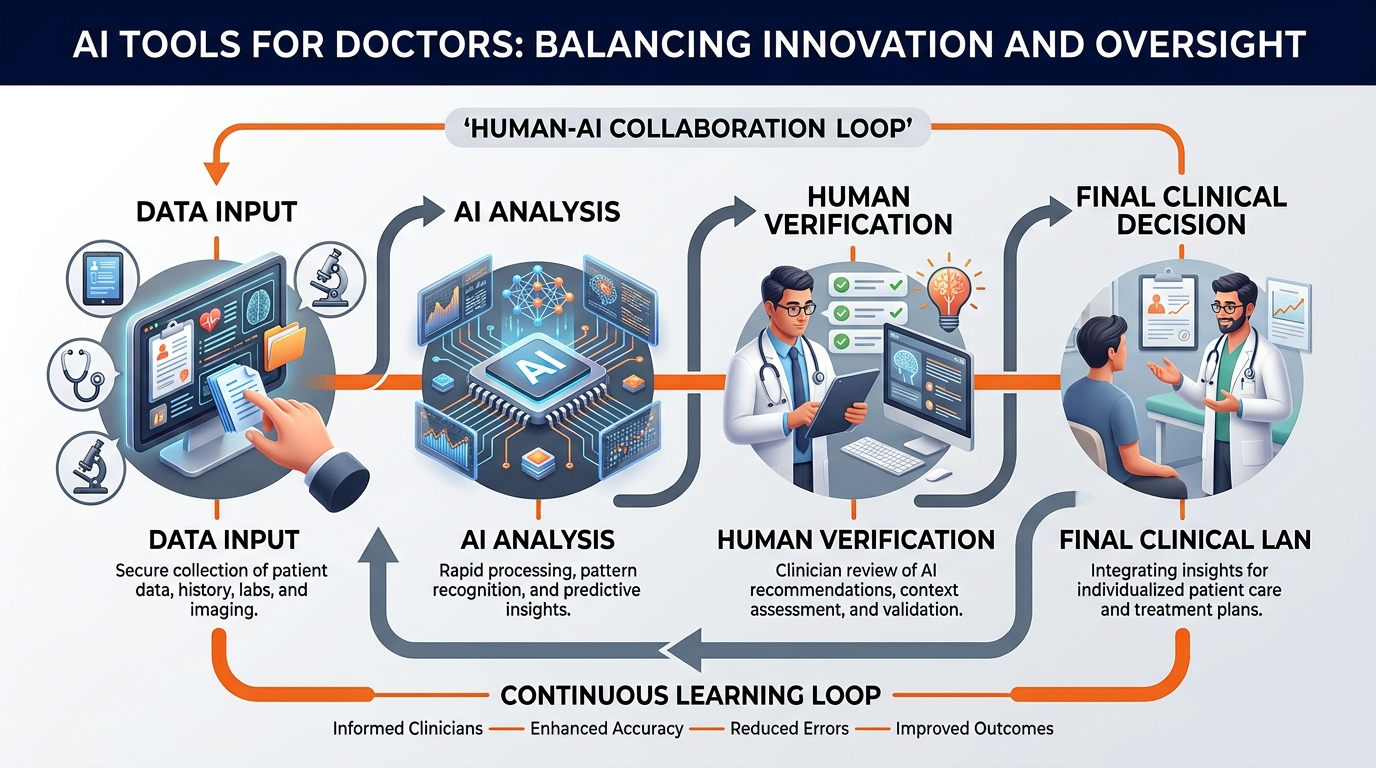
The primary concern for health practitioners is the risk of ‘automation bias,’ where doctors may over-rely on AI suggestions, potentially ignoring their own professional intuition or subtle patient cues. True AI tools for doctors function best as decision-support systems rather than decision-making authorities. This synergy is central to human-ai teaming, which emphasizes collaborative rather than replacement-focused models.
The Role of Explainable AI (XAI)
For AI to be trusted in an Australian clinical setting, models must move away from ‘black box’ architectures. Explainable AI (XAI) provides the reasoning behind a suggested diagnosis, allowing a doctor to trace the logic of the algorithm. This transparency is crucial for meeting the standards expected by patients and regulatory bodies who demand clear evidence-based practice.

The Australian Healthcare Landscape
Australia is positioning itself to be a leader in the regulation and ethical implementation of medical AI. With the National AI Centre guiding the development of sovereign technology, local health organizations have a roadmap for responsible innovation. However, infrastructure remains a hurdle. The demand for robust AI datacentres in Australia highlights the physical and logistical requirements needed to support high-compute medical software at scale.
Furthermore, the integration of AI for health advice platforms must comply with strict ACCC oversight and local data privacy laws. As these tools move from research papers to clinical waiting rooms, ensuring that patient data remains secure is a paramount concern for Sydney’s top health tech innovators.
Strategic Implications for Digital Leaders
For those managing digital agencies or technology departments, the growth of these systems presents both a challenge and an opportunity. Businesses must align their operations with the reality of how generative engine optimization (GEO) is shaping the future of SEO and information discovery. If medical practices cannot find reliable information about AI implementation via search, the adoption gap widens.
As we navigate this transition, organizations should consider the following:
- Strategic Integration: Focus on tools that offer clear integration paths with existing electronic health records (EHR).
- Governance: Establish internal policies that mirror the Australia AI regulation ambition, ensuring compliance before deployment.
- Human-Centric Design: Prioritize user experience for medical staff to reduce cognitive load rather than increase it.
- Security-First Approach: Leverage AI cybersecurity to safeguard patient data against increasingly sophisticated digital threats.
Conclusion and Strategic Outlook
The successful deployment of AI tools for doctors depends on a culture of continuous learning and rigorous human oversight. As we look ahead, the integration of these technologies into the Australian healthcare system will necessitate a focus on ethical deployment and transparency. Companies looking to navigate this complex space require robust digital strategies, from SEO and website optimization to bespoke AI integration and CRM solutions, to ensure their value proposition is clear and compliant.
For further reading on the intersection of healthcare and technology, refer to the Google Search Central guidelines on medical content and the latest NIST AI Risk Management Framework. By aligning with these global standards, Australian businesses can foster the trust necessary to lead in the age of intelligent medicine. If your organization requires assistance in auditing your AI visibility or optimizing your digital footprint for this shifting landscape, the Webbistan team is ready to help.
Frequently Asked Questions (FAQ)
How do AI tools for doctors impact patient safety?
AI tools can improve safety by reducing diagnostic errors and flagging anomalies, provided they are used as decision-support tools with active clinician oversight.
What are the risks of automation in medicine?
The primary risk is automation bias, where practitioners might rely too heavily on algorithmic output without performing necessary independent verification.
Is AI replacing doctors in Australia?
No, the current consensus is that AI serves to augment human expertise, allowing doctors to spend more time on complex patient care and decision-making.
How can hospitals ensure data privacy when using AI?
Hospitals must implement strict data governance, utilize secure cloud infrastructure, and ensure all AI vendors comply with Australian privacy regulations.
How does Webbistan help with AI integration for businesses?
We provide end-to-end support for digital transformation, including AI visibility audits, technical SEO, and infrastructure integration to help your business stay compliant and competitive.