
AI Cybersecurity Protects Businesses in the age of digital transformation, where every business is a technology company—and every business is a target. The landscape of cyber threats has evolved beyond simple phishing; we now face AI-enabled cyberattacks, automated deepfakes, and highly sophisticated exploits that move faster than any human security team. This is why the adoption of Artificial Intelligence in Defense is no longer optional—it is critical. The modern era demands protection at every level of the network.
Traditional, signature-based security systems are fundamentally reactive. They rely on knowing what a threat looks like before they can stop it. But modern threats, particularly polymorphic malware and zero-day attacks, render these methods obsolete almost instantly. AI steps in as a proactive guardian, analyzing petabytes of data in real-time to spot anomalies and behaviors that indicate a threat—even if that threat has never been seen before.
This is the essence of Intelligent Threat Protection—a system that learns, adapts, and defends autonomously. This shift from defense based on signatures to defense based on behavior is the single most important factor ensuring modern Business Continuity AI systems can withstand the pressure.
The Five Core Benefits of AI Cybersecurity Adoption
The strategic advantage gained by implementing AI is multi-faceted, profoundly impacting operational efficiency and financial security:
- Real-Time Anomaly Detection: AI models constantly monitor network traffic, user behavior, and system logs, identifying malicious activity within milliseconds.
- Automated Incident Response: AI isolates infected endpoints and blocks malicious connections instantly—executing Automated Incident Response without delays.
- Zero-Day Vulnerability Defense: By detecting abnormal behavior instead of relying on known signatures, AI provides powerful Zero-Day Vulnerability Defense.
- Reduced Security Fatigue: AI reduces false positives and automates low-level alerts, allowing human analysts to focus on high-impact threats.
- Predictive Risk Modeling: AI analyzes attack patterns to anticipate future threats and secure vulnerable segments proactively.
The speed of defense must now match the speed of the threat. This integration of AI into your defense strategy aligns with broader digital optimization trends, as seen in how Agentic AI grows business operations faster.
The Shift from Human-Scale to Machine-Scale Security
Businesses today generate enormous volumes of data—from transactions to logins. Human teams cannot manually analyze this data. AI, however, is built for machine-scale processing, identifying invisible patterns and analyzing millions of data points per second. This machine-level intelligence forms the backbone of modern cyber defense.
“The future of security isn’t in erecting thicker walls, but in adaptive intelligence that anticipates the threat before it lands.”
This necessity for proactive defense defines the modern Cybersecurity Trends 2025. Companies resisting AI adoption risk defending against today’s threats with outdated tools.
Financial risks are rising too. According to PwC, data breach costs are climbing, proving that AI-driven prevention is an investment, not an expense. AI is now essential for protecting data, reputation, and long-term trust.
AI vs. The Dark Side of Automation
AI is a double-edged sword. While AI Cybersecurity Protects Businesses, hackers also weaponize AI for deepfake impersonations, automated phishing, and advanced identity fraud. The only effective response to AI-enabled attacks is stronger AI-enabled defense.
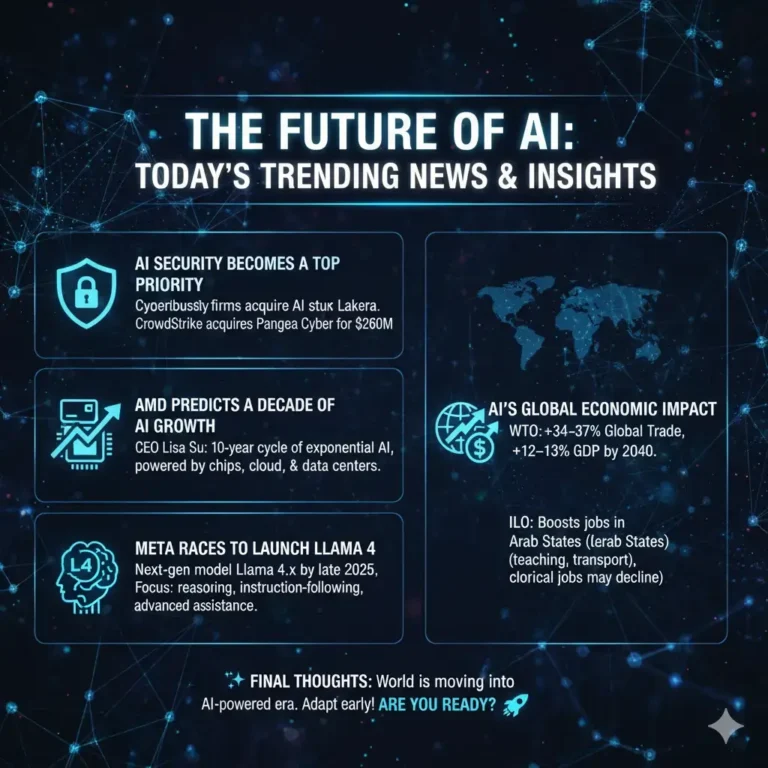
Learn more about how this technological arms race impacts national and enterprise-level defense in The Future of AI in Security, Growth, and Economy.
Strategic Integration and Next Steps
AI security requires strategic planning, not just installation. Businesses must:
- Data Governance: Ensure clean, reliable data for accurate AI decision-making.
- Skills Development: Train teams to manage, interpret, and optimize AI security tools.
- Cross-Platform Defense: Use AI security across cloud, endpoints, and networks for unified protection.
This transformation also expands job opportunities in AI operations and security. With AI robotics taking over real-world jobs, the need for AI governance and security expertise is growing faster than ever.
Businesses must act now to integrate AI-driven defenses that strengthen security and competitive growth.

By adopting AI security solutions, companies protect operations and gain predictive intelligence that helps prevent attacks before they happen. This future relies on systems that not only block threats but anticipate them—ensuring long-term stability.
Stay informed and upgrade your cybersecurity to meet 2025 standards. Access trusted insights like Gartner’s AI in Security Reports and global research from the World Economic Forum on digital trust.